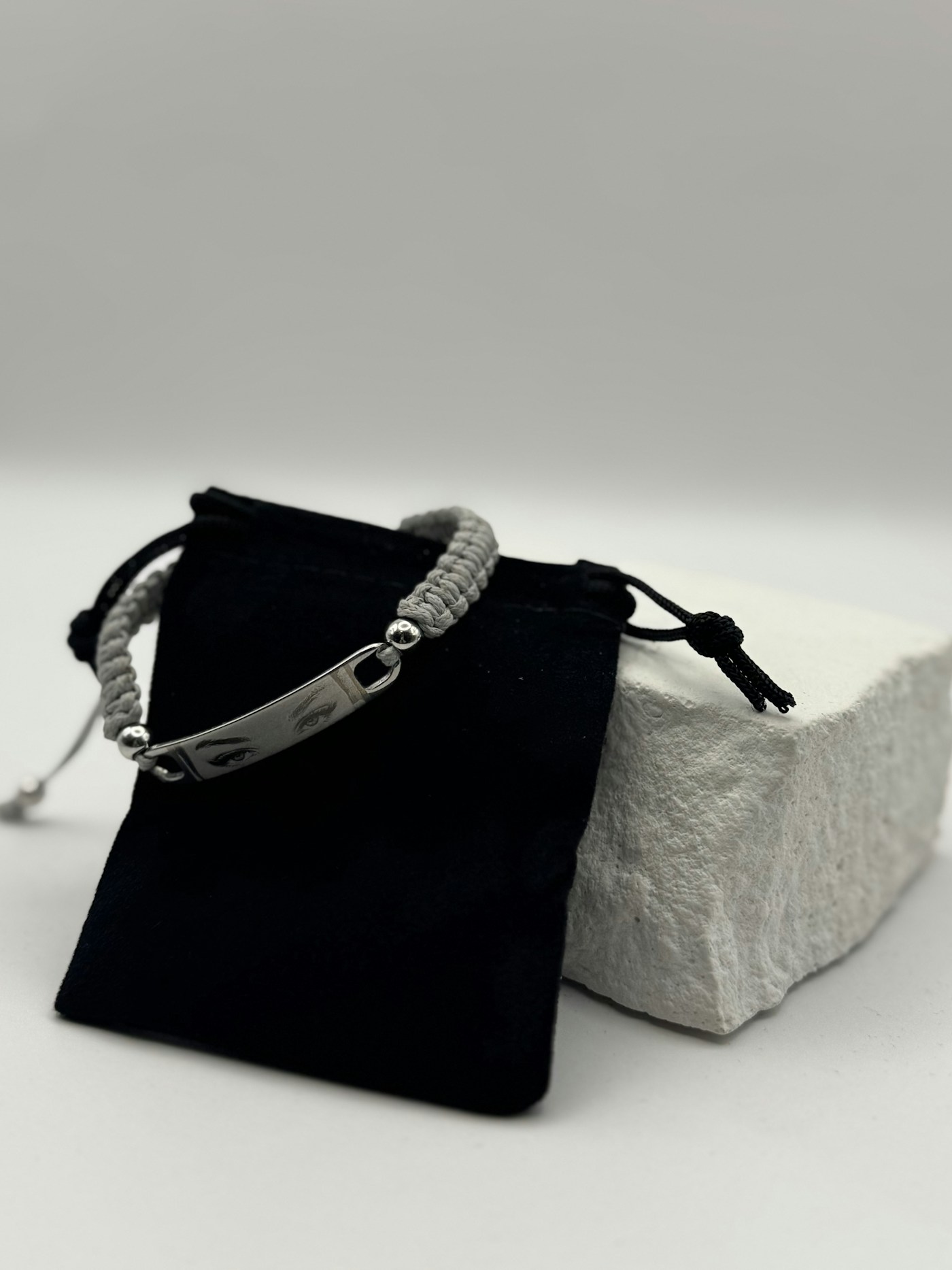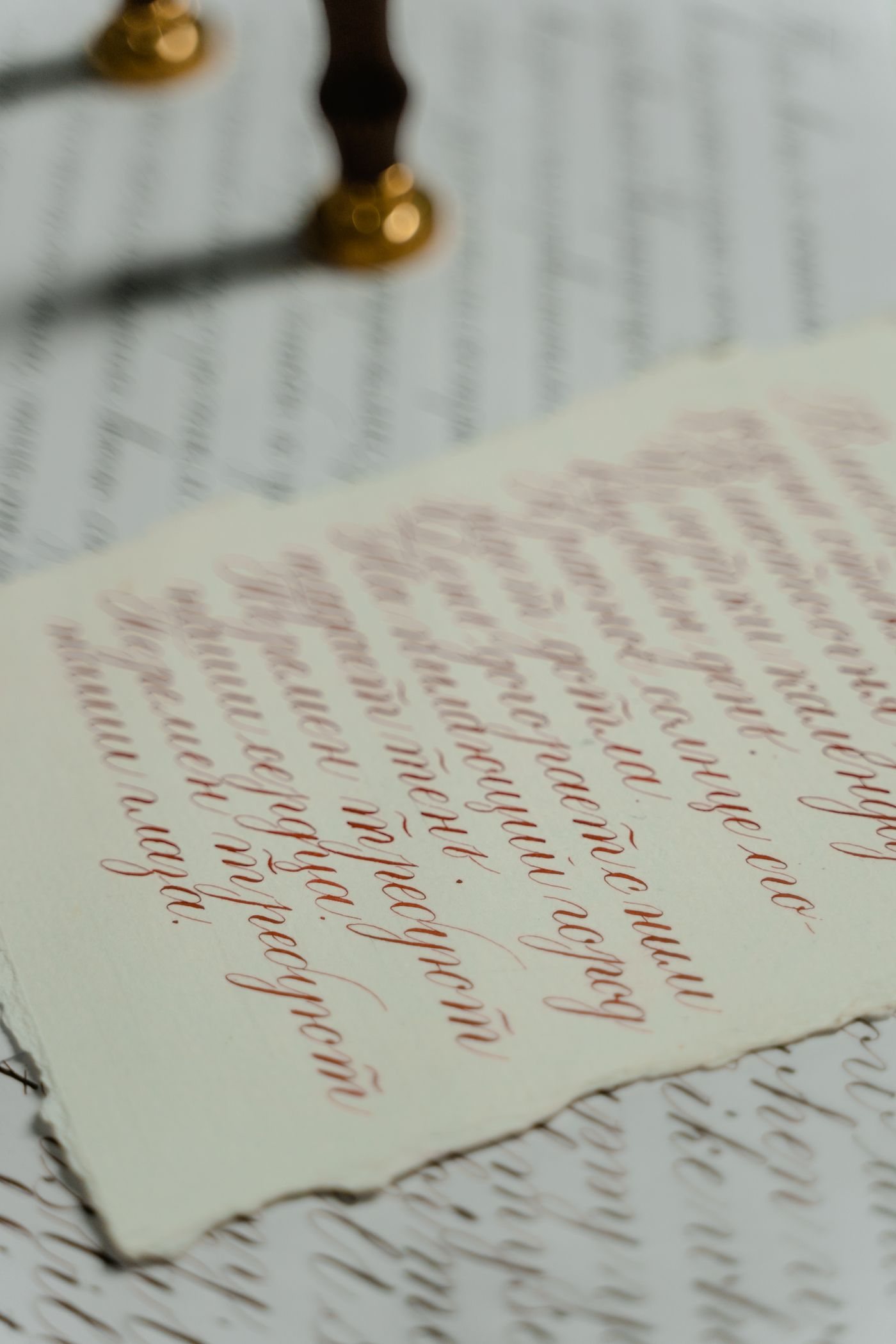
A familiar line of handwriting can hold more feeling than a polished quotation. It might be a parent's recipe note, a friend's sign-off or a few words from an old birthday card. Turning it into a keepsake requires two decisions: which words deserve repeating, and how faithfully they should be reproduced. Start with a small, complete fragment that belongs comfortably outside its original context, then choose a format that leaves the lettering readable.
Find a fragment with its own meaning
A signature alone can be striking, but a short phrase may carry more of the person's voice. Read the surrounding letter before selecting it. Something affectionate in a private exchange may feel uncomfortable when displayed on a wall or worn as jewellery. Consider the feelings of other people mentioned and obtain permission where appropriate. For a memorial gift, check whether the recipient would welcome the handwriting in this form. A quiet conversation can preserve the significance of the gesture without revealing the final object.
Make a clear copy without altering the original
Photograph or scan the writing in even light, keeping the page flat without forcing a fragile fold. Retain a full-page copy and send a cropped duplicate to the maker. Do not trace over faint ink, use cleaning products or cut out the original passage. If the paper is fragile or the ink surface is damaged, seek appropriate conservation advice before handling it further. Explain any marks that should remain, such as an unusual flourish, and identify stains or unrelated writing that should be excluded from the reproduction.
Distinguish cleaning up from rewriting
An artist may need to remove the paper background, strengthen a faint line or join letters from separate examples. Ask what work is proposed and whether the result still represents the original writing. Reconstructing a missing word can change the character more than expected. If authenticity matters most, use the complete phrase you actually have, even if it is shorter. Request a side-by-side proof where possible. Pay special attention to open loops, crossed letters and punctuation, which can disappear when handwriting is reduced to a tiny engraving.
Choose scale before decoration
A broad frame or printed card can retain delicate strokes that would be difficult on a small charm. Make a paper mock-up at the intended finished size and read it from the distance at which it will normally be seen. Keep extra names and dates away from the handwriting unless they are needed for context. Give the recipient a digital copy of the source if that feels appropriate, and return the original document safely to its owner. The keepsake should extend the life of the memory, not replace the family record.