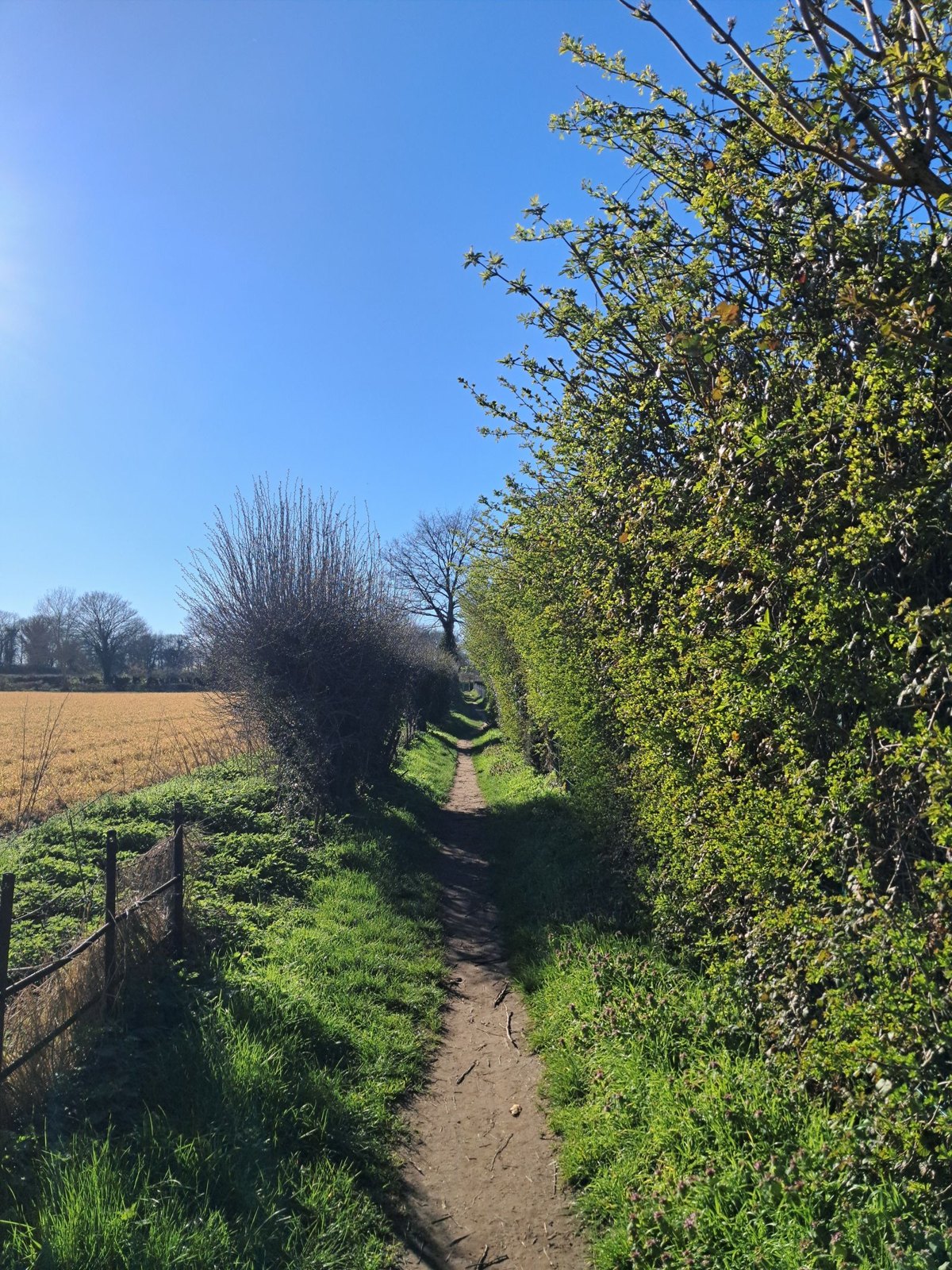
A favourite walk is often remembered through a few details: a particular bend, the view after a climb, a bench or the place where you always stop for something to eat. Those details can become a personal keepsake. You do not need to produce a complete route guide. Choose the part of the walk that belongs to your relationship with the recipient, then find a format that gives it enough space.
Identify what makes this route yours
Write down the moments you associate with the walk before opening a map. Is it the route itself, a recurring conversation or one memorable day? A keepsake based on a regular evening circuit will look different from one marking a single long-distance achievement. Let that purpose guide what you collect.
Ask anyone involved for photographs or a short recollection if the gift can accommodate a little collaboration. Be clear about how their contribution will be used. Do not assume a photograph someone shared privately is suitable for public posting as part of the finished gift; a private printed keepsake and an online display are different choices.
Choose a format that suits the material
One strong photograph with a short caption may be enough. A small fold-out booklet can hold a sequence of places, while a simple drawn line can suggest the route without pretending to be a navigation map. If you use published mapping or other people's photographs, check the relevant reproduction permissions before printing.
Keep the layout focused. A title, a date if meaningful and two or three recognisable details often convey more than a dense page of tiny images. Use a readable type size and leave space around the pictures. The recipient should be able to recognise the walk without needing you to explain every element.
Check details that will become permanent
Verify place names, dates and any distance you intend to print. Distinguish a remembered route from a recorded one, and avoid adding a precise distance simply because a number makes the design look official. If the route changed between visits, choose one version and explain it briefly where necessary.
Consider privacy before showing a route that begins at someone's front door or passes places they would not want identified. You can start the illustration at a public landmark or omit an exact address. For a sentimental print, the meaningful connection rarely depends on revealing the whole journey in exact detail.
Let the object preserve a memory, not direct a journey
If your drawing is decorative, describe it that way rather than implying it is a reliable route guide. Conditions, access and paths can change, and a keepsake may deliberately simplify the geography. Anyone planning to repeat the walk should use current, suitable route information and make their own practical preparations.
Include a short note about why you chose that moment or place. You might leave a blank page for a future photograph, but avoid turning the gift into a requirement to repeat a demanding trip. The keepsake can simply acknowledge that a stretch of ordinary ground became significant because of the time you spent there together.