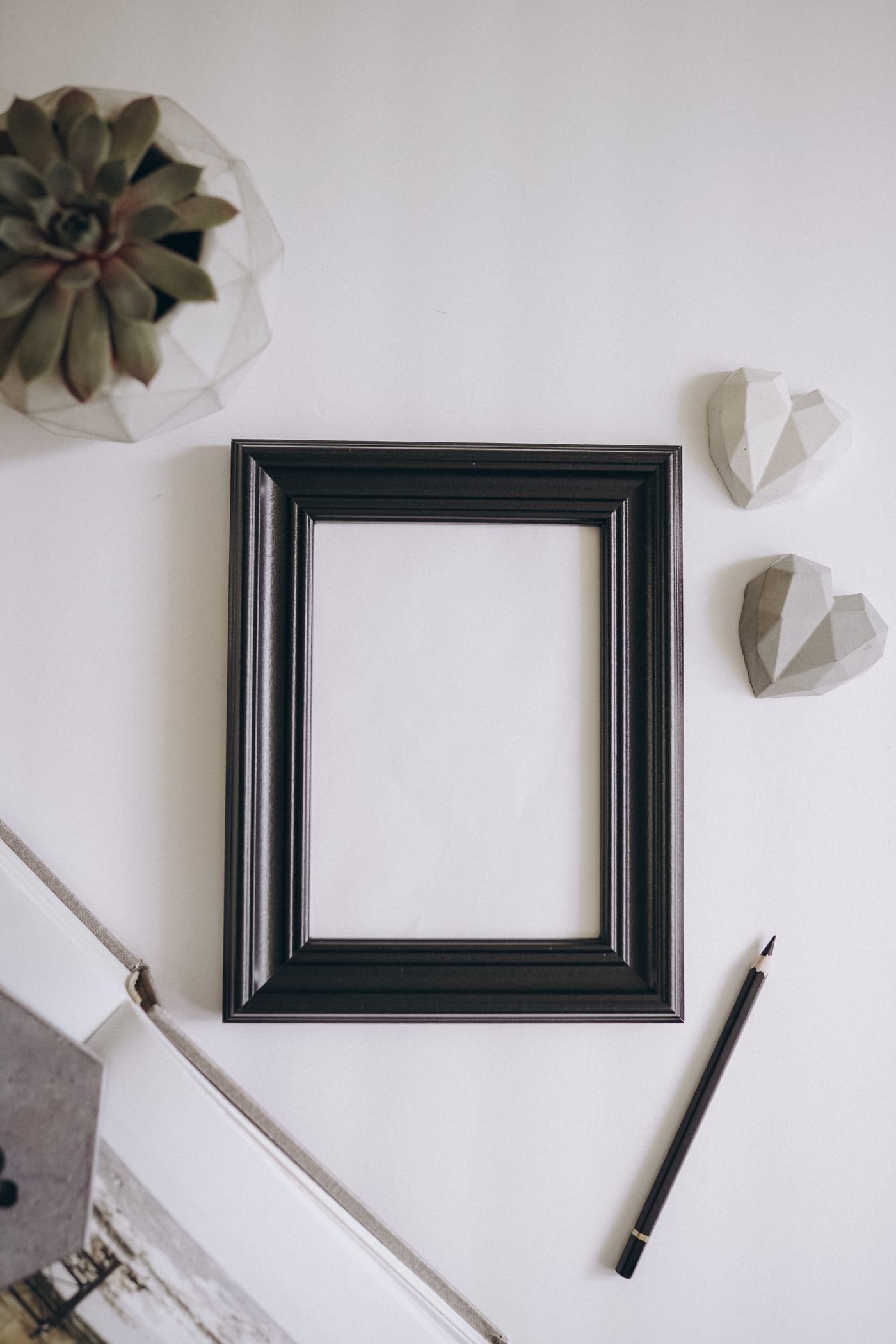
Finding a frame for an unfamiliar print size can become confusing because sellers use several different measurements. The paper dimensions, visible image, mount opening and outside of the frame are not interchangeable. Before buying anything, measure the print carefully and decide whether you want to show its borders. A little preparation can prevent the disappointment of a frame that technically accepts the paper but hides part of the picture or leaves the finished piece looking awkward.
Record the print in two ways
Measure the full sheet, including any white border, then measure the image itself. Note the orientation and any signature, caption or detail close to the edge. A photograph with generous margins presents a different framing problem from an illustration that runs to the paper’s edge.
Use millimetres or centimetres consistently and check whether the frame listing uses inches. Do not round an unusual size to the nearest familiar format without understanding what will be covered. If the print is valuable or delicate, ask a framer how to handle it safely rather than repeatedly measuring directly against its surface.
Understand what a mount changes
A mount creates a visible opening inside a larger frame. It can help an unusual print fit a standard outer size while giving the image space around it. The opening usually needs to overlap the paper enough to hold the arrangement visually, so its dimensions are not simply the full sheet size.
Ask the framer or supplier to confirm the visible opening and the size of paper the mount is intended to accommodate. If a signature must remain visible, say so explicitly. Do not assume that a generic mount sold with a frame will preserve every part of your particular print.
Choose proportion rather than the tightest fit
A frame that only just surrounds the image is not automatically the most economical-looking or attractive solution. A wider mount can give a small work presence without enlarging it. Conversely, a heavy frame may overpower a delicate drawing. Compare simple paper mock-ups before committing.
Think about where the recipient will put it. A shelf display needs a suitable stand and manageable overall dimensions; a wall piece needs appropriate hanging arrangements. Check the complete outer size, not only the print size in the product name.
Protect the work and the gift
For a meaningful original or a print intended for long-term keeping, discuss suitable mounting and glazing materials with a professional. Avoid permanently trimming the paper just to fit a convenient frame unless the owner has explicitly agreed and the consequences are understood.
Keep the print’s information with the gift, including artist details where relevant. Pack the finished frame for its journey, allowing for glazing and vulnerable corners. If the framing decisions feel too personal, giving the print with an offer to choose the frame together can be the more considerate solution.