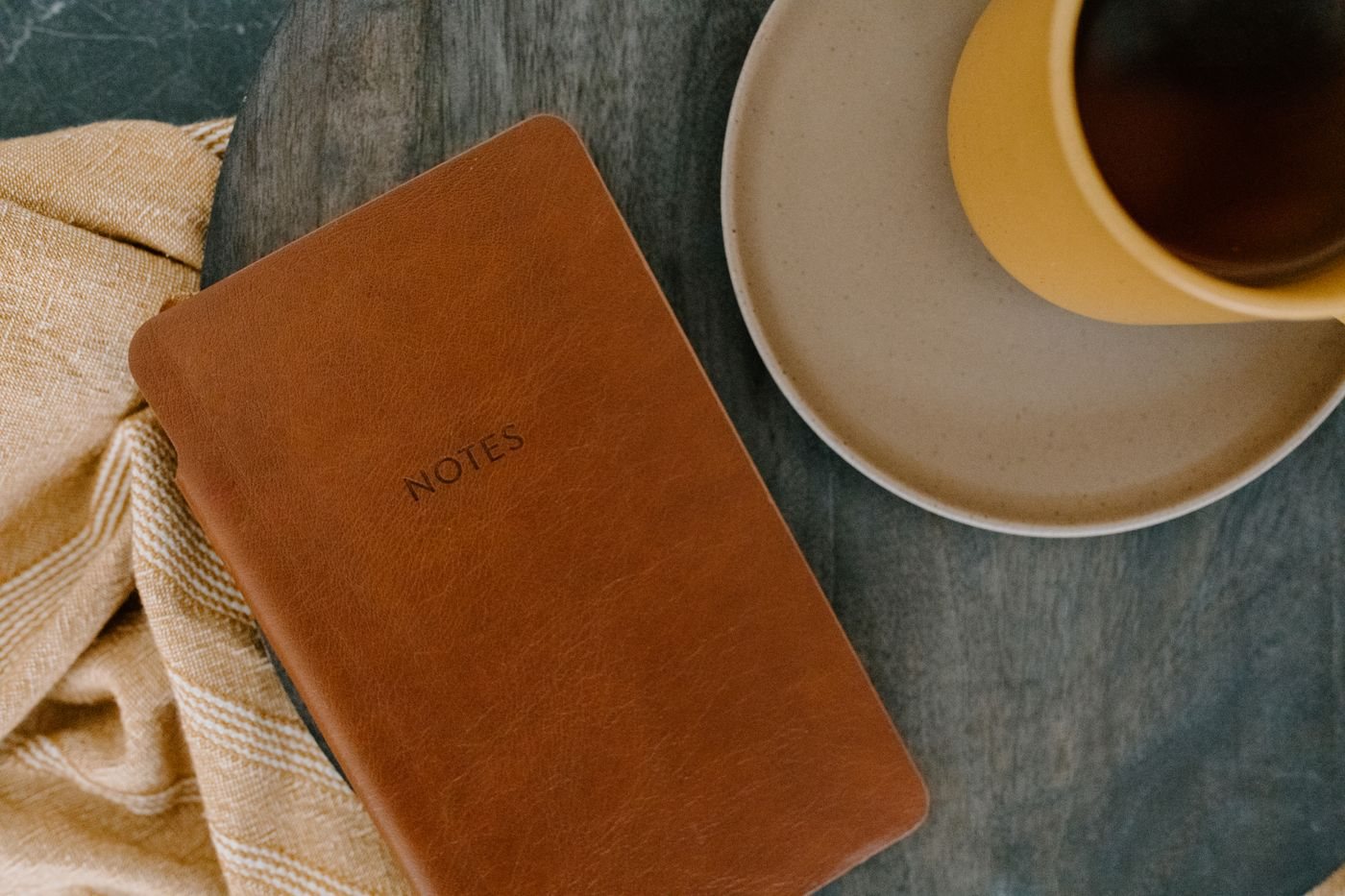
A notebook can look generous in its presentation box yet remain unused because it is too heavy, too precious or filled with the wrong paper. A monogram works best as the final detail on something the recipient would have chosen anyway. Before deciding between gold initials and blind embossing, think about where this book will live: a handbag, a work desk, a kitchen drawer or a coat pocket.
Begin with the pages
Someone who draws diagrams may prefer blank or dotted pages, while a daily list maker might want ruled paper. Look at a notebook they already use, if you can do so naturally. Page colour, line spacing and whether the book opens comfortably matter more than an impressive page count. For a fountain-pen user, look for the maker's specific ink suitability information rather than assuming thick paper will behave well. A small sample or familiar refill is more useful evidence than a luxurious product photograph.
Decide whether the cover should last
A refillable cover makes sense for someone who fills notebooks quickly, provided replacement inserts are straightforward to obtain. Check the actual insert dimensions and binding system; two books described as A5 may not fit the same cover. A permanently bound notebook is simpler and can make a coherent journal for one trip or project. Read the material description carefully, including the lining and closure, and respect anyone who avoids leather. There is no need to turn their gift into a discussion about changing that preference.
Make the initials feel like theirs
Use the name the recipient uses now. A middle initial is not obligatory, and married initials should never be guessed. Ask for a preview showing size and position, particularly if the lettering sits near stitching or a pen loop. Blind embossing gives texture without a contrasting colour; foil creates a more visible mark. Neither is automatically more durable in every finish. Request the maker's guidance, and choose a restrained arrangement that will still make sense when the notebook moves from personal notes to a meeting table.
Give permission to write in it
Leave the writing pages blank unless you know an inscription is welcome. Put your message on a separate card so the owner can decide how the book begins. A useful note might say, “For the ideas you always mention on our walks.” If you add a pen, make sure it suits their grip and ink preference and does not make the gift bulkier than needed. Include any refill reference on a small slip, with the care instructions, so future use does not depend on finding the original listing.