A tea towel is a small gift that can become part of an everyday kitchen routine. Cotton and linen both appear in attractive designs, but the fibre name alone does not tell you how a particular towel will handle. Weave, thickness, finish and construction also affect the experience. Before choosing a set, think about whether the recipient wants something for drying, covering bread or simply adding a small decorative detail. One well-suited towel can be more welcome than a large coordinated bundle.
Look at the cloth closely
A smooth, fine towel and a thick textured one can feel very different even when they share the same fibre label. If shopping in person, handle the fabric and inspect the seams. Online, look for clear close-up photographs and actual dimensions rather than relying on a styled picture beside a mug.
Consider whether the towel feels manageable when folded or hung. A very large cloth may trail from a small hook, while a tiny decorative towel may be awkward for the intended task. A hanging loop can be useful, but its position and stitching matter more than simply having one.
Match the care to the kitchen
Read the wash instructions on the exact product. Do not assume every cotton towel can be treated identically or that every linen towel requires the same routine. Check any restrictions created by printing, embroidery or decorative trim as well as the base fabric.
The recipient may not want to iron kitchen textiles. A design that looks good with a relaxed texture can therefore be a better choice than one whose appeal depends on a perfectly pressed finish. Dark colours, pale colours and contrasting borders also suit different preferences about visible everyday marks.
Use pattern as a small personal connection
Choose an image, colour or motif that relates to the person rather than automatically matching the giver’s kitchen. A botanical drawing may suit a gardener; a quiet stripe may fit someone who prefers simple objects. Avoid a joke or slogan that could become tiring after repeated use.
If adding embroidery, think about placement. A small initial near a corner may be less intrusive than a large stiff panel through the centre. Ask the maker how the customisation affects washing and handling. A tea towel should still function comfortably after the decorative decision has been made.
Present it ready to use
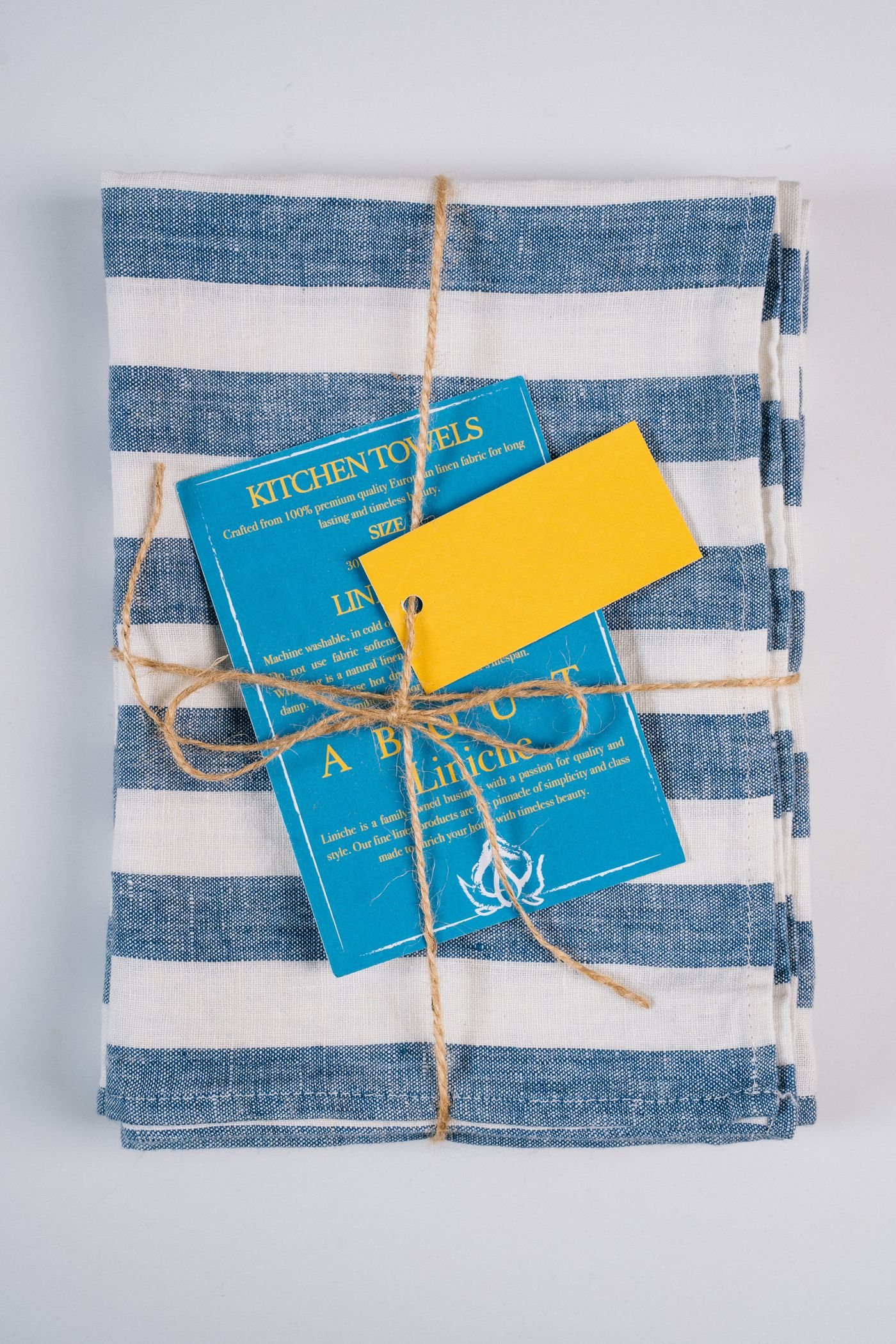
Fold the towel simply and include the original care label or instructions. There is no need to turn it into elaborate packaging for several unrelated kitchen items. If pairing it with something, choose a small relevant object the recipient has expressed a need for.
A short note can explain the pattern or connection. Leave the recipient free to use it rather than treating it as too precious for the kitchen. The best version of this gift usually improves through becoming familiar.