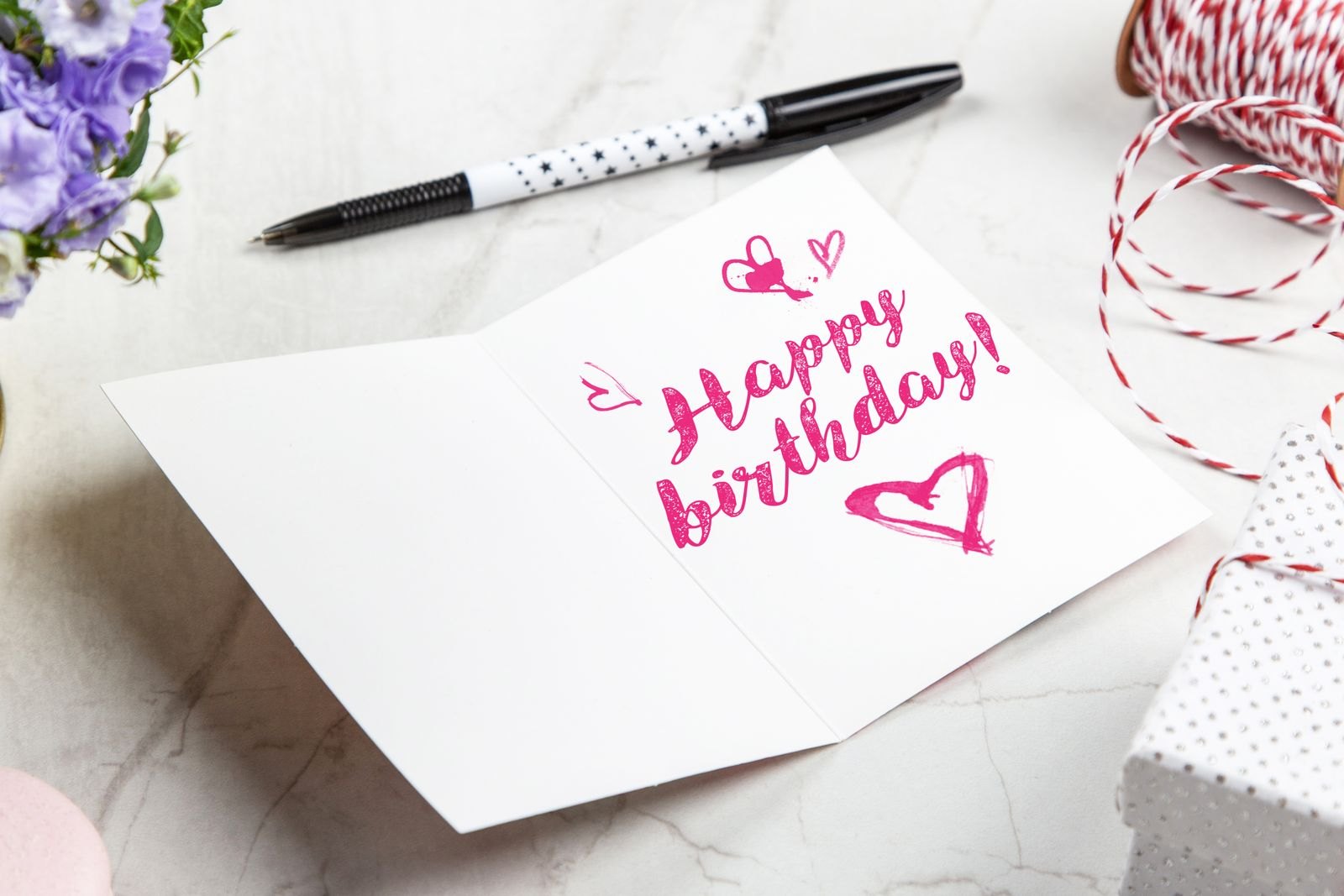
A birthday card does not need to summarise an entire friendship. Trying to make it profound can be the very thing that sends you towards familiar lines that sound like everyone else's message. A warmer approach is to choose one detail you value about the person, then add a wish that belongs to their present life. Even a few sentences can feel complete when they are specific and written in your own voice.
Start with how you actually address them
Use the name or greeting you would choose in conversation. If you normally write 'Hello, Mum', an elaborate formal opening will probably feel borrowed. Equally, a card for a colleague does not need an intimate nickname simply because the occasion is cheerful. Let the relationship set the tone before searching for a clever opening.
Write a first draft away from the card. Begin with the straightforward birthday wish, then see what you naturally want to add. You can remove the first line later if another opening works better. Starting plainly is often easier than trying to invent a memorable sentence before you know what you want to say.
Choose a detail that shows attention
Think of something the recipient does that improves your time together. Perhaps they always find a good place for lunch, make room for a long conversation or send a photograph when something reminds them of you. Name the detail rather than using a string of broad compliments. It gives the message a recognisable centre.
For example, 'I love that a quick coffee with you somehow becomes the best part of the afternoon' says something concrete without relying on a grand claim. Use your own observation, not this exact sentence if it does not fit. Avoid turning a compliment into an expectation that the person must keep looking after everyone else.
Make the wish spacious enough to enjoy
A wish for the year ahead should leave the recipient room to choose it. 'I hope there is time for the things you have been looking forward to' is gentler than predicting a promotion, relationship or other milestone. If you mention a plan, use one they have shared willingly rather than something you think they ought to pursue.
Take particular care around birthdays that the person finds difficult. You can be warm without insisting they have a spectacular day or calling the coming year their best ever. A simple wish for a peaceful afternoon, good company or more time together may fit the situation much better. Avoid age jokes unless you know they enjoy them.
Read it aloud before the ink dries
Read the draft as if you were saying it directly to the recipient. Replace any phrase that sounds unlike you, and cut repeated wishes. Three short sentences can be enough: a greeting, a specific appreciation and a closing thought. A longer card works when you have more to say, not because empty space needs filling.
Check the name and sign-off, then copy it slowly. If the card accompanies a gift, you can add one light connection to the choice, such as 'For the next train journey we keep talking about.' There is no need to explain the cost or justify the present. Leave the message focused on the person receiving it.