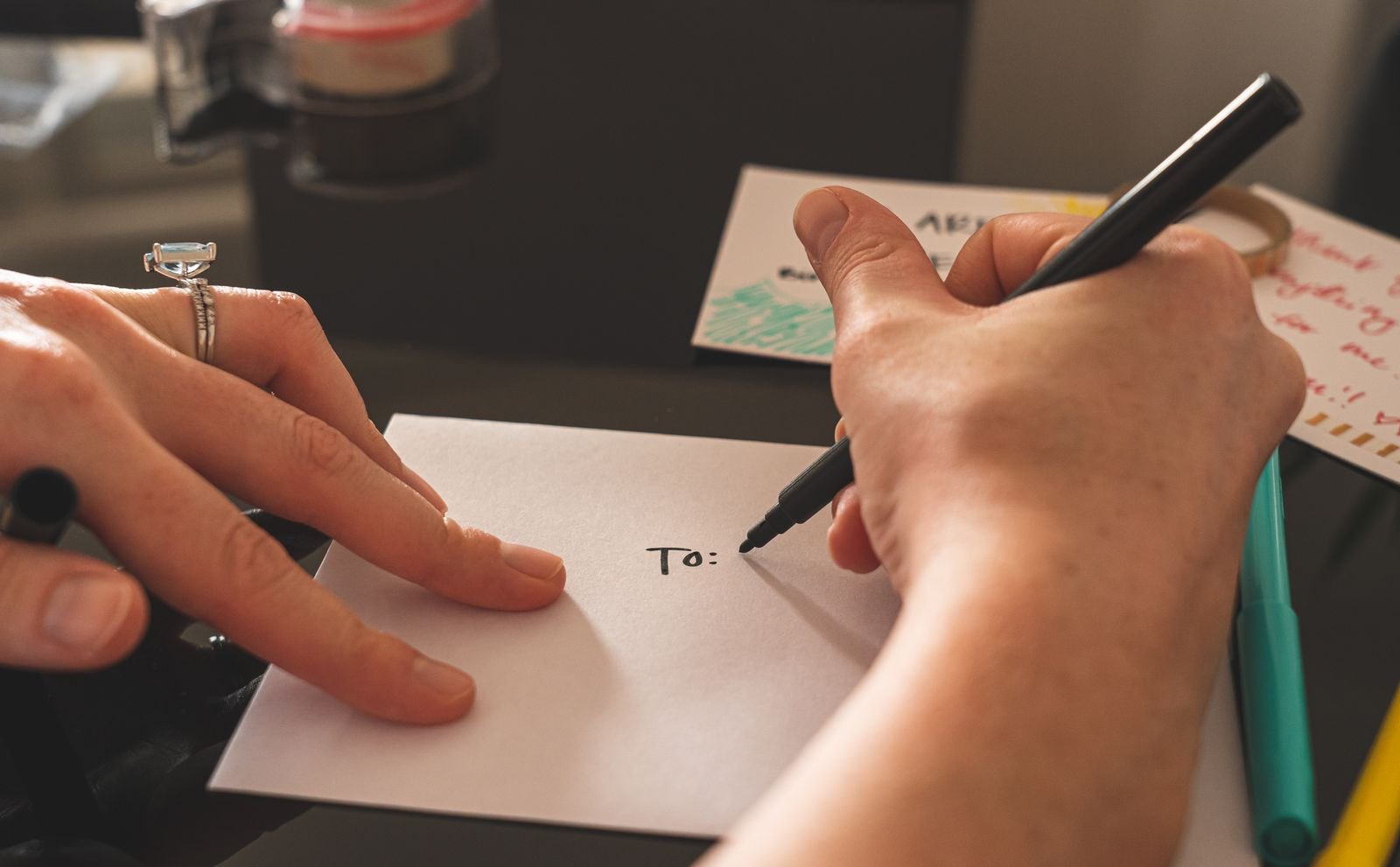
A good thank-you note helps the other person understand what their kindness meant. Naming the gift or favour is a useful start, but a specific memory gives the message texture: the moment they arrived, the meal you shared or the problem they quietly made easier. You do not need a dramatic story. Choose a detail that belongs to the occasion and explain why it stayed with you.
Identify what you are thanking them for
Before writing, finish the sentence 'I want them to know that...' in a rough note. It might be that their lift made an awkward journey possible, that their invitation helped you feel included or that you have already used the notebook they chose. This gives the card a purpose beyond simply completing a social obligation.
Name the action or gift early so the recipient does not have to infer it. 'Thank you for having us for lunch on Sunday' is a clear opening. If several people helped, acknowledge their roles accurately rather than thanking the person whose address you happen to have for everything that happened.
Pick one moment rather than retelling the day
A useful memory often involves a small action. You might recall being welcomed with a cup of tea before you had even taken your coat off, or the way someone kept a place at the table when you arrived late. Describe the detail simply. There is no need to make it sound more exceptional than it was.
Avoid including a story that could embarrass someone if the card were read aloud. A shared mishap may be funny in conversation but awkward in a written keepsake. When thanking a host, choose something you appreciated about their welcome rather than ranking their home, food or family against other people's.
Connect the memory to its effect
After the detail, say what it did for you. 'It meant I could settle in instead of feeling I had missed everything' explains why a small gesture mattered. Keep the claim proportionate. Warmth is easier to believe when it rests on an ordinary, recognisable consequence rather than an extravagant declaration.
For a physical present, mention how you intend to use it if that is sincere. If you are unsure whether the item will suit you, you can still thank the giver for remembering a colour you like or taking time to choose it. Do not invent daily use or a perfect fit simply to make the note sound enthusiastic.
Close without creating another obligation
You may want to suggest seeing the person again, but only offer a plan you genuinely mean to pursue. 'I would love another walk together when you have a free weekend' is more useful than promising a large return favour you cannot arrange. A thank-you does not need to balance an account.
Read the message once for clarity, then send it. A delayed note can begin with a brief acknowledgement that it has taken you a while, without spending most of the space explaining why. The central thought remains the same: their kindness was noticed, and one particular memory is the reason you wanted to write.